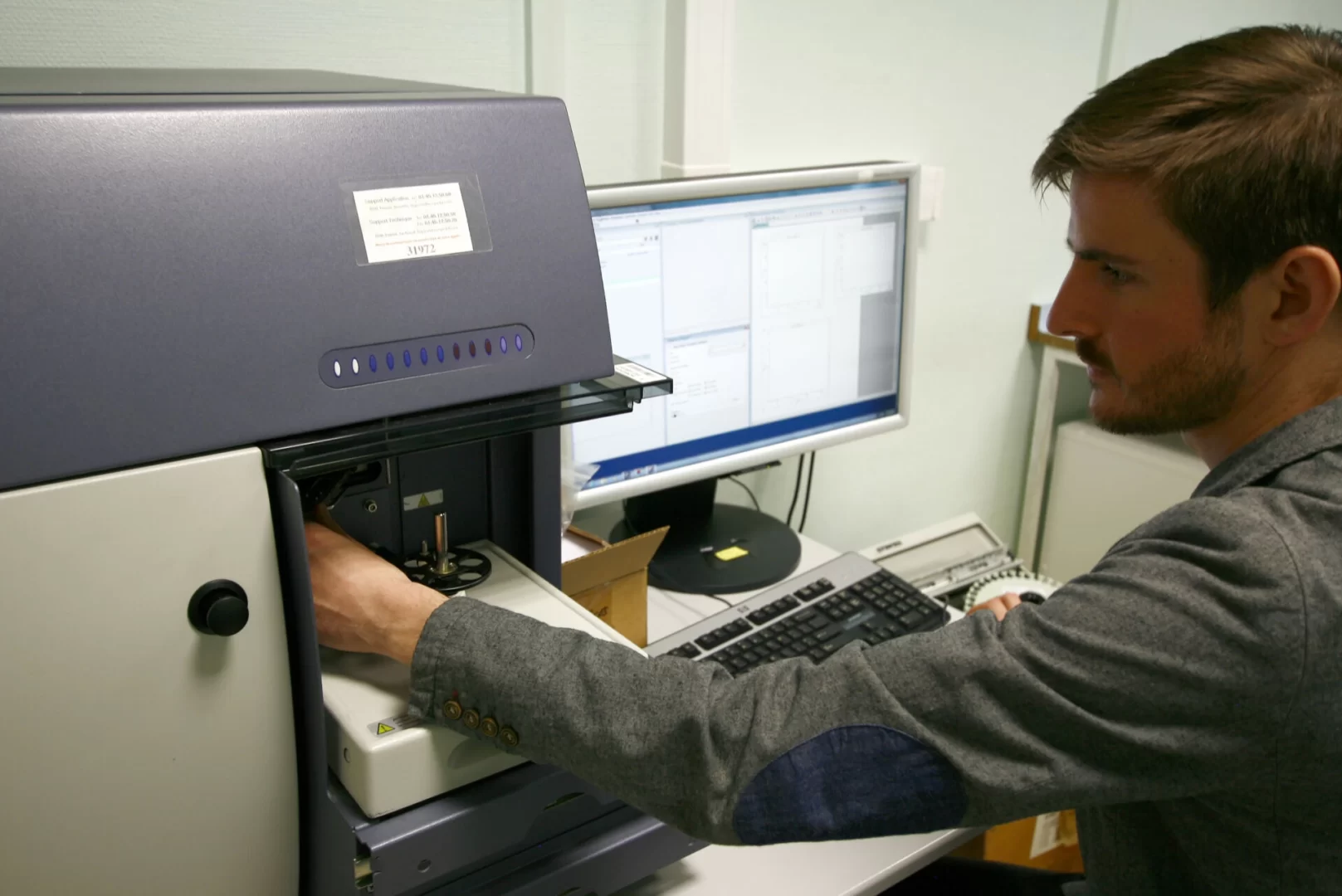
To provide comprehensive and quantitative multiparametric studies, we use state-of-the-art flow cytometry technologies, such as the BD™ LSRFortessa and BD™ Canto™ flow cytometers, as well as the CYTEK Aurora™ for spectral flow cytometry. We can then detect and quantify multiple cellular markers at once, providing important information on cell populations and their characteristics. We frequently carry out a variety of flow cytometry experiments, including:
-
Immunophenotyping:
In-depth examination of immune cell populations that allows for a characterization of cell surface indicators, activation conditions, and stages of differentiation.
-
Functional studies:
By combining flow cytometry with functional assays (for example cytokine production, apoptosis, or cell proliferation assays), we are able to assess cellular responses to treatments or environmental conditions.
-
Data analysis:
We use FlowJo® LLC software for advanced data analysis, providing sophisticated tools for gating, clustering, and visualising complex data sets.
We provide high-throughput sequencing services through ProfileXpert genomic platform and our partnership with Parean Bio, offering a broad range of sequencing technologies. This includes next-generation sequencing (NGS), which allows for high-precision analysis of genomic and transcriptomic profiles, to better understand genetic variations, gene expression, or mutation landscapes :
-
Whole genome sequencing (WGS) :
For a global analysis of the genome, determining mutations, copy number variations and structural changes.
-
RNA-Seq :
For assessing gene expression at the transcript level, offering information on gene regulation, splicing events and differential expression in response to treatments.
-
Target sequencing:
Focusing on specific region of interest, such as cancer-related genes or pathways, for more cost-effective, high-resolution analysis.
-
Single-cell sequencing:
This technique offer a deeper understanding of cellular heterogeneity at the single-cell level, essential for studying tumor microenvironments or immune cell populations.

Our molecular biology capabilities provide a large set of experiments aimed at understanding gene and protein function, expression and regulation. We offer:
-
Quantitative PCR (qPCR):
For quantification of gene expression levels, enabling you to analyze gene regulation and evaluate the response to treatments.
-
Western Blotting:
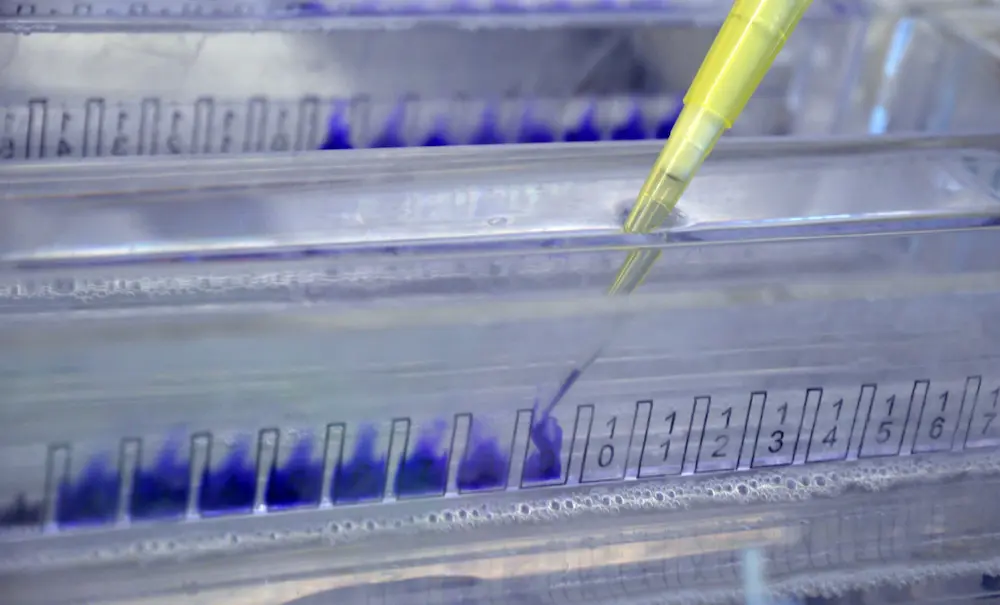
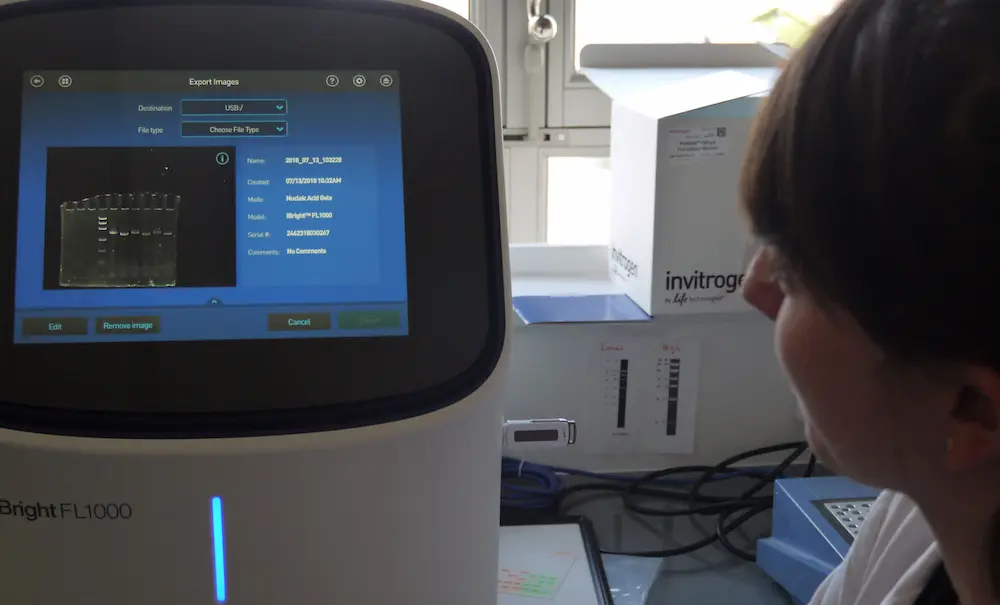
For detection and characterization of proteins of interest, enabling us to examine protein expression or post-translational modifications.
-
Immunoprecipitation (IP):
For studying protein-protein interactions, post-translational modifications, and the isolation of specific proteins from complex samples, allowing to study signaling pathways and cellular processes.
-
Other advanced molecular techniques:
Including but not limited to, ELISA or in situ hybridization, all tailored to meet the specific requirements of your research.